
























油輪采用風力推進技術
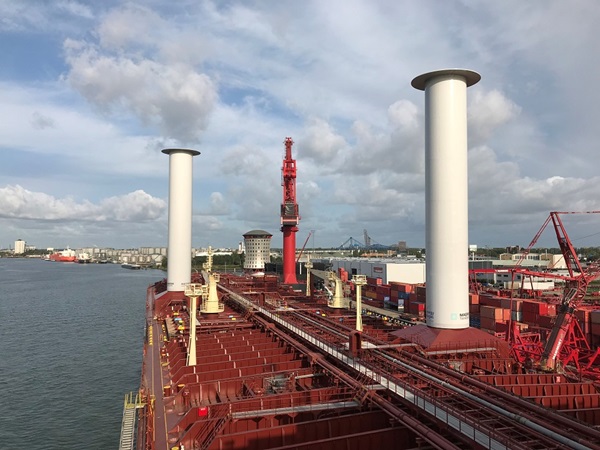
兩艘30米高的旋翼帆已安裝在產品油輪Maersk Pelica號上,其目標是在典型的航線上降低燃料成本和相關排放7%-10%。
原文如下:
Norsepower Oy公司與項目合作伙伴Maersk油輪、能源技術研究所(ETI)和殼牌航運和海事公司宣布,在Maersk Pelica號上安裝了兩艘Norsepower旋翼帆,這是一艘Maersk油輪長距離2(LR2)號產品油輪。
旋翼帆是大型的圓柱機械帆,旋轉產生一種壓差-稱為馬格努斯效應-推動容器前進。旋翼帆將為船舶提供輔助風力推進,通過在典型的航線上降低燃料消耗和相關排放來優化燃料效率。
旋翼帆是上大的帆船之一,直徑30米,直徑5米,安裝在鹿特丹港的產品油輪上。安裝了旋翼帆的次航行將很快開始。
“這個項目是在產品油罐車行業的開創性的。雖然這個行業已經經歷了幾十年的技術發展,但在一艘產品油輪上使用風力推進技術可以使我們進入一個新的競爭環境。這項新技術有潛力幫助該行業提高成本競爭力,因為它為客戶在各地運送貨物,并減少對環境的影響,“Maersk油輪席技術官托米·托馬森(TommyThomassen)說。
該旋翼帆已完成嚴格的陸地測試,包括對各種機械和性能標準的徹底測試,是個獲準在產品油輪上使用的旋翼帆?,F在將對旋翼帆的有效性進行廣泛的測量和評估,以測試該技術的長期財政和技術可行性。勞埃德船級社(LR)船舶性能小組的獨立專家將在測試階段獲取和分析性能數據,以確保在發表技術和操作見解以及性能研究報告之前進行公正的評估。
HDV海洋和近海可再生能源方案主管Andrew Scott解釋說:
他說:“我們委托這項計劃,提供一個獨特的機會,展示旋翼帆尚未開發的潛力。輔助風力推進技術是少數幾種有望提供兩位數百分比改進的節油技術之一。這項技術預計將特別適用于油輪和干散貨船,這項測試將有助于確定產品油輪行業轉子帆的進一步潛力。“
Norsepower席執行官圖馬斯·里斯基(TuomsRiski)補充道:
“隨著在 Maersk Pelican安裝這一裝置,現在有三艘船舶在日常商業運作使用挪威電力的旋翼帆。這些案例中的每一個都代表著非常不同的船舶類型和運行狀況,這表明了在整個海洋行業通過弗萊特納旋翼駕馭風的廣泛機會。“
殼牌航運公司副總裁Graheme Henderson博士總結道:
他說:“航運業面對一項重大挑戰,就是如何在經濟上運輸所需的越來越多的貨物和能源,同時減低對環境的影響。”我們認為,采用、測試和推動創新技術具有重大優勢,這些技術在幫助航運業應對這一挑戰方面顯示出真正的希望。“
挪威電力公司的旋翼帆解決方案是個數據驗證和商業運作的輔助風力推進技術,可用于海事工業。當風條件有利時,主發動機可以節流,節省燃料,減少排放,同時保持速度和航行時間。每艘北力旋翼帆均采用輕質復合夾層材料制造,確保旋翼帆保持良好平衡,并提供高科技、低維護的解決方案。
原文如下:
Two 30-metre tall rotor sails have been installed onboard the product tanker vessel Maersk Pelican targeting a reduction in fuel cost and associated emissions on typical global shipping routes of 7-10%.
Testing begins on product tanker vessel utilising wind propulsion technology
Norsepower Oy, together with project partners Maersk Tankers, Energy Technologies Institute (ETI) and Shell Shipping & Maritime, announced the installation of two Norsepower Rotor Sails onboard Maersk Pelican, a Maersk Tankers Long Range 2 (LR2) product tanker vessel.
The rotor sails are large, cylindrical mechanical sails that spin to create a pressure differential - called the Magnus effect - that propels the vessel forward. The rotor sails will provide auxiliary wind propulsion to the vessel, optimising fuel efficiency by reducing fuel consumption and associated emissions by an expected 7-10% on typical global shipping routes.
The rotor sails are one of the world’s largest at 30 metres tall by five metres in diameter and were installed on the product tanker vessel in the port of Rotterdam. The first voyage with the rotor sails installed will commence shortly.
“This project is breaking ground in the product tanker industry. While the industry has gone through decades of technological development, the use of wind propulsion technology onboard a product tanker vessel could take us to a new playing field. This new technology has the potential to help the industry be more cost-competitive as it moves cargoes around the world for customers and to reduce the environmental impact,” said Tommy Thomassen, Chief Technical Officer, Maersk Tankers.
The rotor sails have completed rigorous land testing, including thorough testing of various mechanical and performance criteria, and is the first rotor sails to be Class approved for use on a product tanker vessel. Extensive measurement and evaluation of the effectiveness of the rotor sails will now take place to test the long-term financial and technical viability of the technology. Independent experts from Lloyd’s Register’s (LR’s) Ship Performance team will acquire and analyse the performance data during the test phase to ensure an impartial assessment before technical and operational insights as well as performance studies are published.
Andrew Scott, Programme Manager HDV marine and offshore renewable energy, ETI explained:
“We commissioned this project to provide a unique opportunity to demonstrate the untapped potential of Rotor Sails. Auxiliary wind propulsion is one of the few fuel-saving technologies that is expected to offer double-digit percentage improvements. The technology is projected to be particularly suitable for tankers and dry bulk carriers, and this test will assist in determining the further potential for Rotor Sails in the product tanker industry.”
Tuomas Riski, CEO, Norsepower, added:
“With this installation on the Maersk Pelican, there are now three vessels in daily commercial operation using Norsepower’s Rotor Sails. Each of these cases represents a very different vessel type and operational profile, demonstrating the widespread opportunity to harness the wind through Flettner rotors across the maritime industry.”
Dr. Grahaeme Henderson, Vice-President, Shell Shipping & Maritime, concluded:
“The shipping industry faces a major challenge in how it can economically ship the increasing amounts of goods and energy the world demands, whilst lowering its environmental impact. We see significant advantages in embracing, testing and driving innovative technologies that we believe show real promise in helping the shipping industry meet this challenge.”
Norsepower’s rotor sail solution is the first data-verified and commercially operational auxiliary wind propulsion technology available for the global maritime industry. When wind conditions are favourable the main engines can be throttled back, saving fuel and reducing emissions, while maintaining speed and voyage time. Each Norsepower Rotor Sail is made using lightweight composite sandwich materials, which ensure the rotor sail remains well-balanced and offers a hi-tech, low maintenance solution.